
Uncategorized
bromantane ladasten
Bromantane and Ladasten: Are They the Same Compound?
Researchers searching for Bromantane Ladasten information often encounter both names in chemical databases, scientific papers and historical literature. This guide explains how Bromantane, Bromantan and Ladasten are connected.
Bromantane and Ladasten are closely connected names for the same underlying compound.
PubChem lists Ladasten among the synonyms associated with Bromantane, while published research also refers to ladasten (bromantan). In practical research terms, Bromantane describes the chemical compound, while Ladasten has been used as a product or trade name associated with it.
Are Bromantane and Ladasten the Same Compound?
In the scientific and chemical literature, Bromantane and Ladasten are closely connected to the same underlying chemical compound.
The U.S. National Library of Medicine’s PubChem database lists Ladasten among the deposited synonyms for Bromantane. Published scientific papers also explicitly use descriptions such as “ladasten (bromantan)”.
The distinction is mainly one of terminology. Bromantane is commonly used as the compound name, while Ladasten appears in pharmaceutical and clinical literature as a name associated with products containing that compound.
Researchers should avoid assuming that every historical product using a particular trade name has identical excipients, manufacturing specifications or formulation details. Chemical identity and finished product formulation are separate considerations.
Why Does Bromantane Have Different Names?
Scientific compounds often accumulate multiple names over time. A substance can have a systematic chemical name, a shortened research name, database synonyms, alternative transliterations and commercial names.
Bromantane is a good example. Depending on the source, researchers may encounter:
- Bromantane
- Bromantan
- Bromontan
- Ladasten
- N-(4-bromophenyl)adamantan-2-amine
Because of this naming variation, searching only one term can cause a researcher to miss relevant literature.
Someone researching Bromantane Ladasten should therefore consider both names when reviewing databases such as PubMed and PubChem.
Bromantane Chemical Identification
Chemical identifiers provide a more reliable way to confirm compound identity than relying solely on brand names or spelling variations.
PubChem gives the computed IUPAC name as N-(4-bromophenyl)adamantan-2-amine and lists a molecular weight of approximately 306.24 g/mol.
For an additional general overview of the compound, including its alternative names and historical background, you can also review the Bromantane entry on Wikipedia.
Read Bromantane on Wikipedia →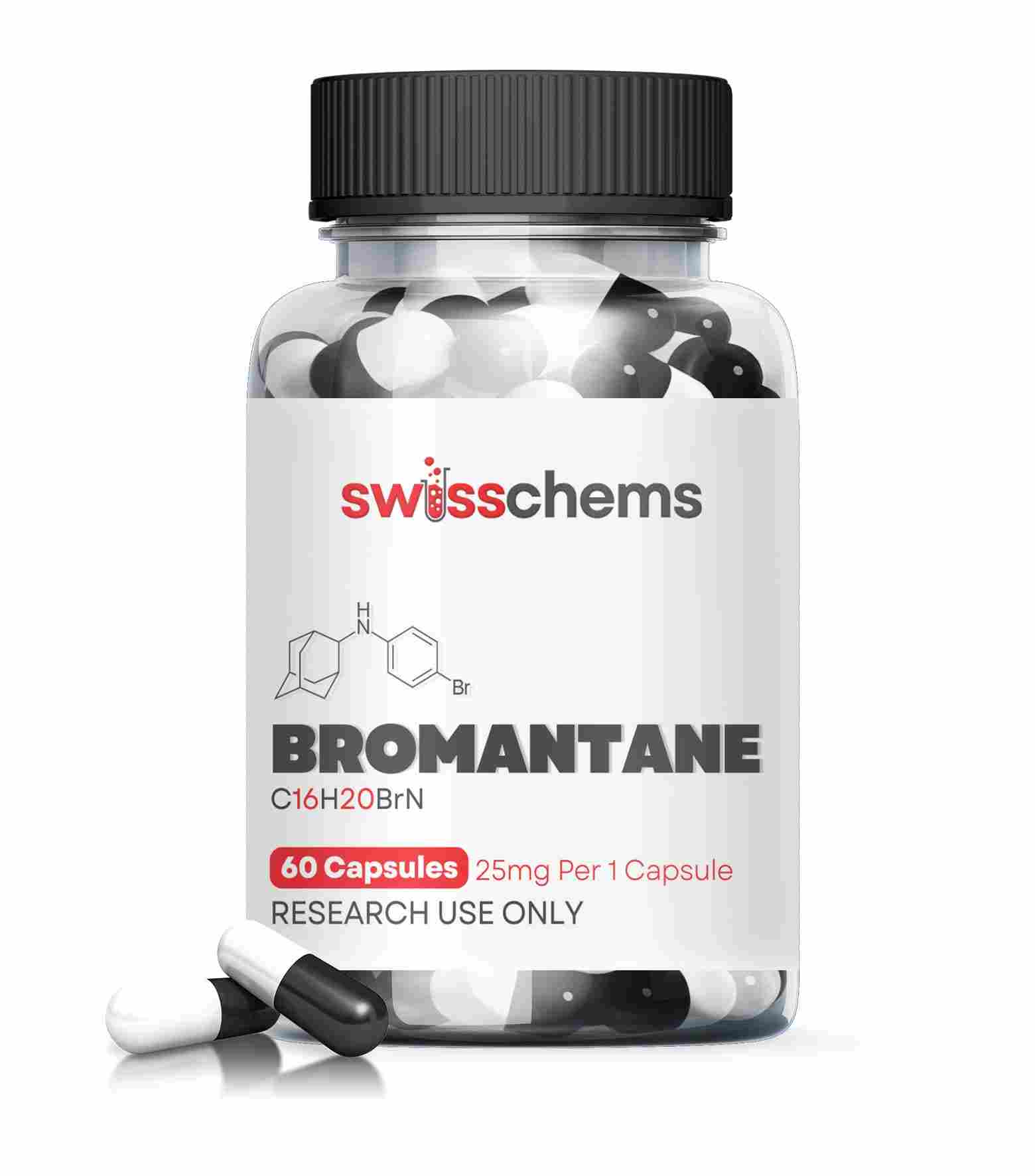
Ladasten in Bromantane Research
Understanding the Ladasten name becomes particularly important when reviewing scientific literature.
Several studies indexed by PubMed use Ladasten rather than Bromantane in their titles. Without searching both names, researchers could overlook relevant publications.
For example, a 2005 animal study refers explicitly to ladasten (bromantan), directly linking the two names within the research record.
Other studies published under the Ladasten name investigated areas such as gene expression, neurotrophic factors, psychophysiological parameters and asthenic disorders.
Ladasten and Mechanistic Research
A 2012 animal study investigated Ladasten in relation to expression of neurotrophic-factor genes and mitogen-activated protein kinase pathways in several rat brain regions.
Earlier research also examined changes involving the tyrosine hydroxylase gene, an enzyme-related pathway relevant to catecholamine synthesis.
These mechanistic studies are useful for understanding hypotheses about the compound’s biological activity, but they should not automatically be interpreted as evidence of specific human benefits.
Has Ladasten Been Studied in Humans?
Yes. The scientific literature contains human studies published under the Ladasten name.
One 2009 publication examined psychophysiological parameters in healthy volunteers following a single Ladasten administration.
Other Russian clinical publications investigated Ladasten in populations diagnosed with asthenic disorders.
A multicentre publication indexed by PubMed reported data from 728 analysable patients across 28 clinical centres. The authors reported favourable outcomes according to the clinical measures used in that study.
The presence of human studies does not mean every claim made about Bromantane online has been clinically established. Study population, methodology, geographical concentration, replication and regulatory context all matter when interpreting the literature.
Bromantane vs Bromantan: Is There a Difference?
Bromantane and Bromantan are generally used as alternative names for the same underlying compound.
PubChem lists both names under the same compound record, PubChem CID 4660557.
The spelling difference becomes particularly noticeable when moving between English-language web content and older scientific papers originating from Russia or Eastern Europe.
Researchers searching academic databases should therefore consider both spellings.
| Name | Typical Context | Research Interpretation |
|---|---|---|
| Bromantane | Common English compound name and modern research discussions. | Refers to the underlying chemical compound. |
| Bromantan | Alternative spelling appearing in databases and scientific literature. | Associated with the same PubChem compound record. |
| Ladasten | Name frequently encountered in pharmaceutical and clinical literature. | Listed by PubChem as a synonym associated with Bromantane. |
| N-(4-bromophenyl)adamantan-2-amine | Systematic chemical identification. | Useful for precise compound identification. |
What Should Researchers Record When Identifying Bromantane?
When receiving or documenting a Bromantane research material, laboratories should rely on more than the words Bromantane or Ladasten alone.
Useful identifying information can include the compound name, CAS number, labelled quantity, product format, batch or lot identifier, supplier documentation and analytical information available for the specific material.
This helps distinguish chemical identity from branding, packaging or historical commercial names.
Why the Bromantane Ladasten Connection Matters for Literature Searches
The terminology matters particularly when conducting a literature review.
A search for only “Bromantane” may return one group of publications, while searches for “Bromantan” or “Ladasten” can reveal additional papers.
Researchers performing a thorough literature search should therefore consider multiple recognised names rather than assuming a single keyword captures the entire research record.
Continue Exploring Bromantane
This article focuses specifically on the relationship between Bromantane and Ladasten. Continue with our broader Bromantane guide or review what published scientific studies actually report.
Bromantane Research Products at SwissChems UK
Researchers can review the current Bromantane 25mg capsule research listing available through SwissChems UK .
The product listing contains 60 capsules, with each capsule identified as 25mg, and is presented strictly for laboratory and analytical research.
Researchers can also browse the SwissChems nootropics research collection or explore the complete research catalogue .
Frequently Asked Questions
Are Bromantane and Ladasten the same?
Ladasten is listed by PubChem among the synonyms associated with Bromantane, and published scientific literature also refers to “ladasten (bromantan).” Bromantane generally describes the underlying compound, while Ladasten has been used as a product or trade name associated with it.
Is Bromantan different from Bromantane?
Bromantan and Bromantane are alternative names used for the same underlying compound. Both appear under PubChem compound CID 4660557.
What is the CAS number for Bromantane?
Bromantane is associated with CAS number 87913-26-6.
What is the chemical name for Bromantane?
PubChem lists the IUPAC name as N-(4-bromophenyl)adamantan-2-amine.
Why do some scientific papers use Ladasten instead of Bromantane?
Ladasten appears as a name associated with Bromantane in clinical and pharmacological literature, particularly publications originating from Russia. Searching both terms can therefore produce a more complete literature review.
Has Ladasten been studied in humans?
Yes. PubMed indexes human studies involving Ladasten, including research involving healthy volunteers and clinical populations with asthenic disorders. These studies should be interpreted according to their individual designs and limitations.
Where can I read more about Bromantane?
Read the complete Bromantane guide , our Bromantane research review , or visit the Bromantane Wikipedia page for an additional external overview.
Bromantane and Ladasten Sources
For compound identity, this article uses established chemical databases and published scientific literature. Wikipedia is included as an additional general-reference outbound source rather than as the primary scientific source.
- PubChem — Bromantan / Bromantane compound record
- Wikipedia — Bromantane
- PubMed — Effect of ladasten (bromantan) in an animal research model
- PubMed — Effect of Ladasten on psychophysiological parameters of healthy volunteers
- PubMed — Multicentre Ladasten study in asthenic disorders
- PubMed — Mechanisms of action of Ladasten
Research Use Only: SwissChems UK products are supplied strictly for laboratory, analytical and research use only and are not intended for human or veterinary consumption, therapeutic use, diagnosis or clinical administration. This article is provided for informational and research-reference purposes and does not constitute medical advice.
