
Uncategorized
bromantane
What Is Bromantane? Complete Research Guide
Bromantane is an adamantane-derived compound that has appeared in scientific literature for several decades. This guide examines its identity, research history, alternative names, published scientific literature and place within modern laboratory research.
What is Bromantane?
Bromantane, also known as Bromantan, is an adamantane-derived chemical compound identified by PubChem as N-(4-bromophenyl)adamantan-2-amine. It has appeared in experimental pharmacology and neuroscience literature, particularly in studies examining stimulant-related and dopaminergic effects.
What Is Bromantane?
Bromantane is a synthetic adamantane-derived compound that has been investigated in scientific research involving the central nervous system, physical performance, stress responses and monoamine signalling.
Researchers may encounter several spellings and alternative names when reviewing older scientific papers and compound databases. These include Bromantane, Bromantan and Ladasten.
PubChem lists Bromantane as the compound N-(4-bromophenyl)adamantan-2-amine. The compound belongs structurally to the broader family of adamantane derivatives.
Bromantane Compound Identification
Correct compound identification is particularly important when reviewing older Bromantane research because scientific publications, databases and product catalogues may use slightly different names.
These identifiers help researchers distinguish Bromantane from similarly named compounds and provide useful reference points when reviewing analytical documentation, research papers or chemical databases.
Bromantane Research History
Scientific interest in Bromantane is not new. Research papers involving Bromantane can be found from the 1990s onward, with a substantial portion of the early literature originating from Russian research institutions.
Experimental studies examined areas including neurological activity, monoamine systems, physical performance, stress conditions, electroencephalographic activity and pharmacological characteristics.
Much of the available Bromantane literature is older and includes animal or preclinical research. Findings from these studies should not automatically be interpreted as evidence of safety, efficacy or suitability for human use.
Bromantane and Ladasten: Are They the Same?
The name Ladasten frequently appears when researching Bromantane online or reviewing scientific databases.
PubChem includes Ladasten among the deposited synonyms associated with Bromantane. Researchers should nevertheless identify compounds using chemical identifiers such as the CAS number and molecular structure rather than relying only on a commercial or historical name.
We will examine this topic in greater detail in our dedicated Bromantane and Ladasten research guide as part of this article series.
What Has Bromantane Research Examined?
Bromantane has appeared across several areas of experimental pharmacology. Published literature has investigated its effects using animal models as well as a smaller number of human studies.
| Research Area | Examples in Published Literature | Important Limitation |
|---|---|---|
| Dopaminergic systems | Animal research has examined dopamine-related signalling and metabolism. | Animal findings cannot automatically be extrapolated to humans. |
| Serotonergic systems | Older studies investigated changes involving serotonin and related metabolites. | Much of this work is preclinical. |
| EEG research | Experimental studies examined changes in electroencephalographic patterns. | EEG changes do not establish a clinical benefit. |
| Physical stress research | Bromantane appears in literature examining physical workload and extreme environmental conditions. | Research conditions differ substantially between studies. |
This mixed research history is one reason it is important to separate what Bromantane studies actually measured from claims that go beyond the available evidence.
Bromantane and Dopamine Research
One of the most frequently discussed areas of Bromantane research involves the dopaminergic system.
Experimental studies in rats reported changes in dopamine-related parameters, while other research examined Bromantane’s interaction with dopamine uptake and broader monoamine signalling.
Dopamine itself is produced through a tightly regulated biochemical pathway. Tyrosine hydroxylase is one of the key enzymes involved in catecholamine synthesis, and changes in this pathway are studied extensively across neuroscience.
However, describing a compound as interacting with a dopaminergic pathway should not be confused with demonstrating a specific therapeutic or cognitive outcome in people.
Why Does Bromantane Continue to Attract Research Interest?
Bromantane remains an unusual research compound because historical literature places it at the intersection of several research areas rather than within a single straightforward category.
Some scientific publications have described it in connection with stimulant-like activity, while broader reviews have discussed Bromantane alongside compounds historically described as actoprotectors.
This unusual research history continues to make Bromantane a subject of interest when studying adamantane-derived compounds, monoamine systems and historical experimental pharmacology.
Bromantane Research Formats
Bromantane may appear in research catalogues in different physical formats. The format should always be distinguished from the identity of the underlying research compound.
Bromantane Capsules
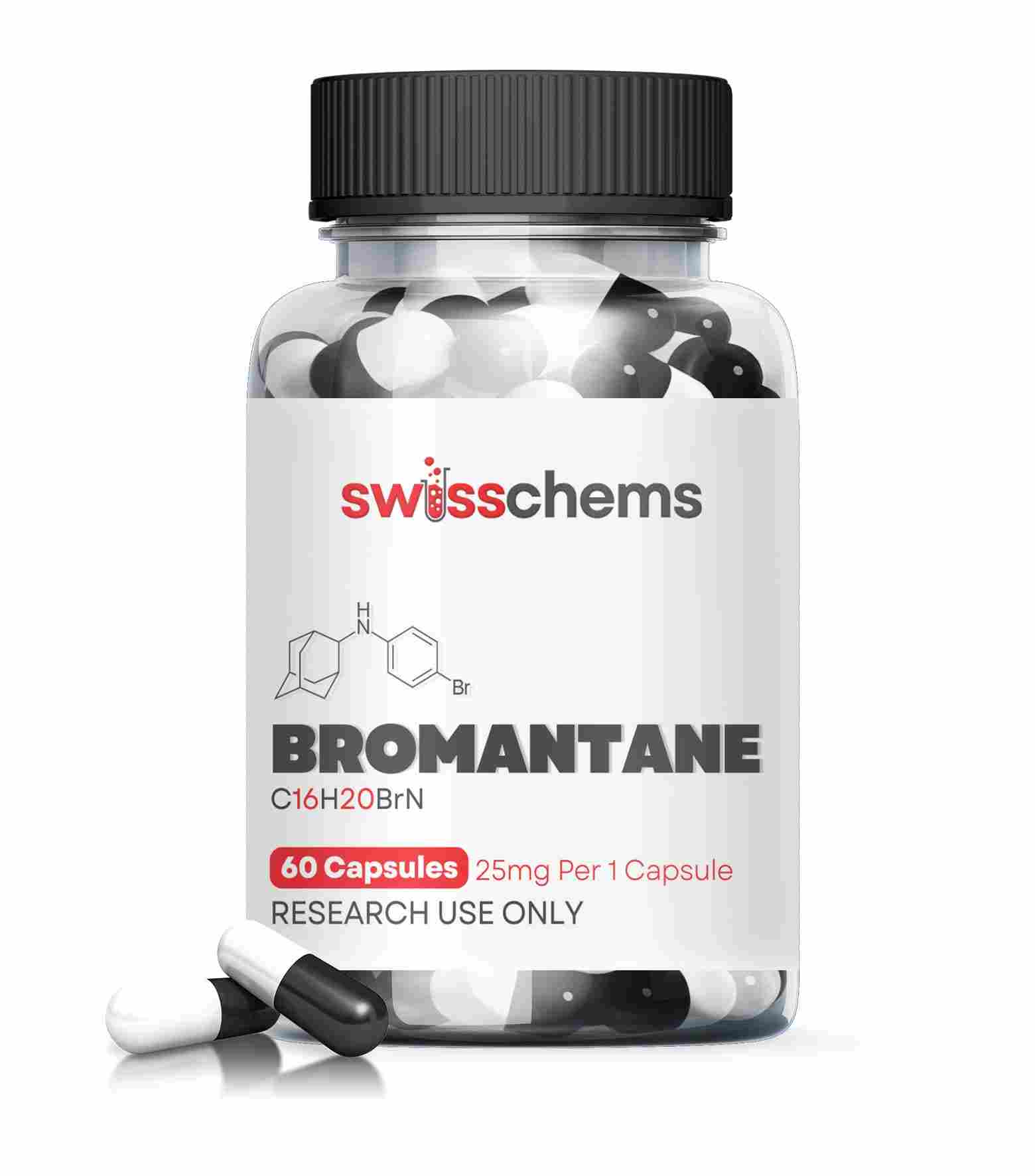
SwissChems UK currently lists Bromantane 25mg capsules, 60 capsules within its research catalogue.
The capsule format provides a clearly identified unit presentation for research inventory and documentation purposes.
Bromantane Powder
Powder formats may also appear in specialist research catalogues. Laboratories comparing different formats should review the exact compound identity, labelled quantity, lot information, available analytical documentation and handling instructions associated with the specific product being evaluated.
Explore Bromantane from SwissChems UK
Researchers reviewing Bromantane can explore the current 25mg capsule research listing from SwissChems UK, containing 60 capsules per package.
SwissChems UK is organised around clearly identified research products, formats and categories for laboratory and analytical research customers.
Bromantane and Competitive Sport
Bromantane also has an important history in anti-doping regulation. The World Anti-Doping Agency’s 2026 Prohibited List identifies Bromantan within the S6 stimulant category as a non-specified stimulant prohibited in competition.
Athletes and individuals subject to anti-doping rules should therefore rely on the current WADA Prohibited List and guidance from their relevant sporting authority rather than information from commercial websites.
How Should Bromantane Research Be Interpreted?
It is useful to approach Bromantane research with a distinction between compound identification, experimental findings and clinical conclusions.
A laboratory study showing that Bromantane influences a biological pathway does not by itself demonstrate that the compound produces a particular benefit in humans.
Similarly, animal research can help scientists generate hypotheses about mechanisms, but those findings require appropriately designed human research before broader conclusions can be made.
Readers should be cautious of Bromantane articles that convert preliminary, animal or mechanistic findings directly into definitive claims about human outcomes.
Bromantane Identification, Storage and Laboratory Handling
Laboratories receiving Bromantane research material should document the exact product name, labelled quantity, batch or lot identifier and accompanying analytical information where available.
Storage and handling requirements should follow the product label and batch-specific documentation rather than assumptions based only on the compound name.
Access to research materials should be restricted to qualified personnel operating under appropriate laboratory procedures and applicable institutional requirements.
Frequently Asked Questions About Bromantane
What is Bromantane?
Bromantane is an adamantane-derived research compound also known as Bromantan. It has appeared in scientific literature examining neurological, monoamine and performance-related experimental models.
What is another name for Bromantane?
Bromantan is a common alternative spelling. PubChem also lists Ladasten among the deposited synonyms associated with the compound.
What is the CAS number for Bromantane?
The CAS number associated with Bromantane is 87913-26-6.
What is the molecular formula of Bromantane?
PubChem lists the molecular formula of Bromantane as C16H20BrN.
Is Bromantane the same as Ladasten?
Ladasten appears as a synonym associated with Bromantane in PubChem. Researchers should nevertheless use chemical identifiers such as CAS number and molecular structure when confirming compound identity.
Has Bromantane been scientifically studied?
Yes. Bromantane appears in published research dating back several decades. Much of the available literature is older and includes animal or preclinical research, so findings should be interpreted within the design and limitations of each study.
Does Bromantane affect dopamine?
Several experimental studies have investigated Bromantane in relation to dopaminergic systems and dopamine-related parameters. These mechanistic findings should not be treated as proof of a particular clinical outcome in humans.
Is Bromantane prohibited in sport?
WADA’s 2026 Prohibited List identifies Bromantan among non-specified stimulants prohibited in competition. Athletes should consult the current WADA list and their sporting authority for applicable rules.
Where can researchers find Bromantane in the UK?
Researchers can review Bromantane capsules through SwissChems UK and explore related products in the nootropics research catalogue .
Bromantane References
- PubChem — Bromantan / Bromantane compound record
- PubMed — Effect of Bromantane on dopaminergic and serotonergic systems
- PubMed — Mechanisms of the neurotropic action of Bromantane
- PubMed — Neuro- and psychophysiological effects of Bromantane
- PubMed — Pharmacology of actoprotectors
- World Anti-Doping Agency — 2026 Prohibited List
Explore Bromantane Research Products
Browse the current Bromantane research listing or explore additional nootropics and specialist research compounds available through SwissChems UK.
Research Use Only: SwissChems UK products are supplied strictly for laboratory, analytical and research use only. They are not intended for human or veterinary consumption, therapeutic use, diagnostic use, food use, cosmetic use or clinical administration. This article is provided for informational and research-reference purposes and does not constitute medical advice.
